

Sisters

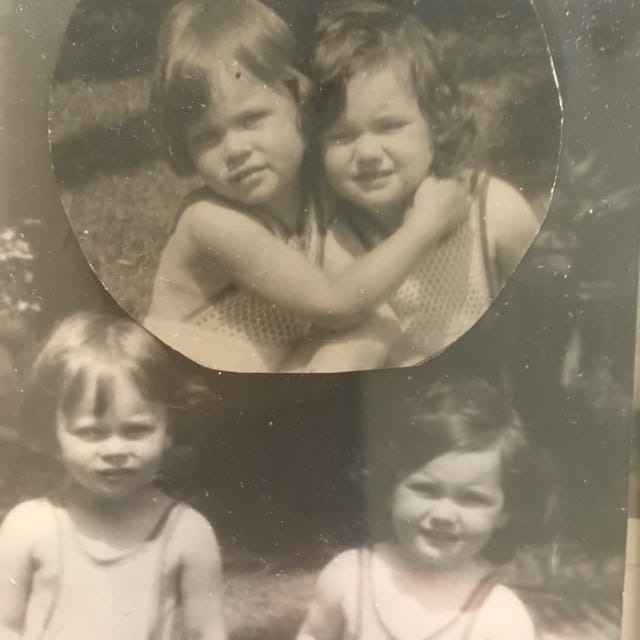
Six years ago this June, my mother and I flew to Minneapolis to visit her younger sister. It had been a long time.
My mom moved away from home as soon as she could. She found her family dysfunctional—I don’t think a single relative would disagree—and created a life for herself out West. Over the years she got regular reminders of her desertion, but throughout her parents’ chronic conflict and her sisters’ frequent feuds, she never lost touch with anyone. All through my childhood we would visit and so would each branch of her nuclear family—Ma and Pa, Eunice’s family, Inez’s family—usually by car. Always fun.
But it had been a long time.
We stayed with my aunt Eunice for three days. Her health was declining, but she rallied when we came. We got together with her four kids—my cousins—and their families, and we had a great time. Eunice was always fun. She was also riveting, insightful, hilarious, forthright, magnetic, unconventional. Her presence had a force to it; her voice was resonant. Her way with words was vivid—partly an expression of her generation, partly geographical, partly out of an irrepressible joy in her spirit. My mom isn’t particularly formal, but the unfiltered way her sister spoke made her seem that way.
Marlis, Eunice and I talked a lot—in fact, over the course of those three days we talked for six hours. Well, they talked and I recorded. With disarming matter-of-factness, they covered a range of painful realities of their family history, from alcoholism and poverty (they were children of the Great Depression) to all manner of family struggle and scandal. The disparities between their recollections, i.e., their frequent disagreements over the facts of their shared childhood, became a motif both poignant and funny—to me, at least.
There was a lighthearted story or two. Like the time they took off on bicycles for a ride so much longer and further than they would ever have gotten permission for that they didn’t dare ask. It was such a wholesome bit of mischief, especially compared to the troubles their youngest sister got into at that age.
When I shared this slightly edited excerpt with my cousin Sondra, she said she heard our mothers immediately. Without knowing them, you might not. And because the written word has such serious limitations when it comes to conveying the richness and detail of this particular dialogue—the interruptions, laughter, crosstalk, colloquialisms—I’ve embedded an excerpt of the recording partway through. Let the familiarity, humor, chaos and love you hear in their voices function as an audio illustration of sorts.
Marlis: You know, one of the things I am aware of is, it was pretty nice to escape from…
Eunice: Do you remember Minnehaha Falls, all those? Do you remember those?
Marlis: …and one of the ways we escaped, especially in the summertime, was to go on these bike rides. And we had these two friends down the block...
Eunice: One was her age, one was mine.
Marlis: Ramona was in my grade and Marlene was in her grade, and so the four of us would take off, but they had two bikes. They each had a bike. We only had one—and, um…
Eunice: It was bad.
Marlis: We each took turns.
Eunice: Not really!
Marlis laughs.
Eunice: Don’t let her take that—it was a boy’s bike. She had a girl’s bike.
Marlis: I didn’t have a bike at all! We had this bike.
Dayna: You had a boy’s bike between the two of you?
Eunice: It was too heavy almost for her. It had a big, heavy bar. It was a big bike.
Dayna: She wasn’t big enough to, or strong enough to—?
Marlis: I was smaller than she was.
Eunice: I was—
Marlis: She was stronger and taller.
Eunice: I liked the sports and I did all this stuff, yeah, she wasn’t—
Dayna: Was she kind of delicate, fragile?
Eunice: No, not delicate and fragile, just not strong.
Dayna: Not strong.
Eunice: She didn’t do anything that was strong.
Marlis: She was the fragile one, even then.
Eunice: What?!
Marlis: Well, see this capsulizes something and it’s probably all wrong.
Eunice: I’m sure it is.
Marlis: But she would get so ex—you would get so excited about something.
Eunice: Oh, jeez. I think that’s probably part of my stuff even today.
Marlis: I think so, too.
Eunice: I do, too, I really do.
Dayna: What?
Eunice: I’d get so excited. Like when we were going to Girl Scout camp with a bunch of other kids. To go to girl scout camp, you went for the weekend. And it was in the fall, it wasn’t the greatest weather. So but you had to bring all your junk. Anyway, the time came in the morning for us to go to camp. And I’m so excited I haven’t slept much of the night and I wake up with hives. Another time it was the Aquatennial Parade. I’m going with some other kids to the Aquatennial Parade, puking, sicker than a dog, the morning of the parade.
Dayna: ‘Cause you’re so excited?
Eunice: Yes.
Marlis: She got so excited…
This pattern continued through Eunice’s adult life, by the way. Anxiety medications didn’t help in the long run, and, among other symptoms, her blood pressure suffered unpredictably, debilitatingly. And the terrible irony is that Eunice had always wanted to have fun. She hated being bored, loved doing things. Four-wheeling, snowmobiling, jet-skiing, skydiving…
Marlis: Hmm. Well I mean I hadn’t remembered the Girl Scout episode or parade episode, but the one I remember symbolizes that whole phenomenon, because I think we were going to go to the circus, because the morning we were to go she was so excited, and so eager and so worked up that she was just sick. So you missed the whole circus.
Eunice: I missed everything.
Dayna: It’s so sad.
Eunice: That was when I was a kid. And I don’t think it’s changed much. ‘Cause I’ve been down to Baja already and the place had had a band to play and a disk jockey, or whatever it was, and I started to get so sick, and I told Gordy [Eunice’s husband] I had to get out of here. Just the noise was already makin’ me so sick to my stomach, by the time I got to our camper, I was just in bed, just—“Oh my gosh I’m so sick, I’m so sick.”
Dayna: Just too much.
Eunice: Yeah, a lot of things are just too much.
Eventually we realized we’d lost the thread.
Dayna: We never got to the story about the—
Marlis: Bicycle.
Eunice: Oh!
Marlis: Okay.
Eunice: Do I have to tell her?
Marlis: You go ahead.
Eunice: I had a boy’s bike, really heavy. I could really ride it good. So we got this idea we want to go on a really good adventure. Do you know the Mendota Bridge at all?
Dayna: I know of it.
Eunice: It runs across the river.
Dayna: Yeah.
Eunice: And it heads down to the country.
Dayna: Uh-huh.
Eunice: There’s a church over there on the hill. And our goal is to go to that church, cause it was far.
Marlis: And besides, then we were in Minneapolis. I mean we were in—
Eunice: 2501…
Dayna: Mm-hmm.
Eunice: Way down, just above Lake Street.
Marlis: Between Franklin avenue and Lake Street.
Eunice: So anyway I go in early in the morning pack a lunch, and tell my parents I’m just gonna go on a bike ride. But they didn’t care if we were gone through lunch, we told ‘em we were takin’ lunch.
Dayna: Mm-hm.
Eunice: Which didn’t make any difference if we got back till supper cause there was nothin’ to worry about. So anyway I headed out over the bridge, the Mendota Bridge. Was there a sidewalk or just a path?
Marlis: No there’s a sidewalk on the bridge.
Eunice: So we had to stay on the sidewalk with our bikes, and I’m bucking somebody—
Dayna: You’re bucking Marlis, right?
Eunice: Well, we took turns who I bucked.
Dayna: Okay. Oh wait, what?
Eunice: ‘Cause it was uncomfortable sitting on that bar, so you don’t want to sit on that for hours.
Dayna: Just the two of you?
Marlis: No, these other two friends.
Dayna: Ramona and Marlene?
Marlis: Yeah.
Eunice: So we got way, way over the bridge, started to head south.
Marlis: And the fact that we knew where we were going is just—
Eunice: We’d go by there on our way down to the village.
Dayna: You knew the way?
Eunice: Well, we got as far as the church. And we decided, “Oh, we’re really gettin’ tired.” So we decided—well, we had stopped for lunch and all this already. And then we decided, “Jeez, my legs are gettin’ sore.” Everybody else was good but I was really gettin’ tired. And sitting on that bar could never have been comfortable, ‘cause you sit sideways with the bar under your rear. So we decided we better head back. Oh my gosh. The stops. And the complaining. “What did we do this for?!” I mean we thought we were never gonna get home. It was so bad.
Marlis: It was such a relief.
Eunice: I couldn’t hardly pedal anymore. How many miles could that have been?
Marlis: Oh, that’s what I hoped you might know.
Eunice: Oh, up Franklin to Lake Street would have been a mile. So that would’ve been half a mile. Another mile goin’ over, and goin’ out or whatever.
Marlis: Well, it’s possible it could have been as much as 10 miles.
Eunice: Yeah at least. It was more than that.
Dayna: One way? No.
Marlis and Eunice: Yes.
Dayna: On one of those little single speed bicycles.
Eunice: It’s only five miles down to Ma’s. And we’d run down there with the kids a lot. So five miles didn’t take that long to do it in a car. But this was a harder road cause there was traffic and all this junk. Oh we just never thought we’d—I think we were almost in tears. Even Marlene and Ramona—one, Marlene, she was just frail. She was not a sturdy person at all. She was just having a fit. Ramona had more strength. But nobody was in the shape to get back home. Then we had to get back home, with our bikes, pretend we weren’t worn out, pretend that we hadn’t done anything dumb, and appear our normal selves and we couldn’t hardly breathe.
Dayna: And when was it by the time you got back? Like did you miss supper or anything like that?
Marlis: No, we didn’t miss supper but we really stressed the last way home, because we were going to be in big trouble if we weren’t home by supper.
Eunice: So that was a push, we had to be there by supper.
Dayna: And they never knew?
Eunice and Marlis: No!
Marlis: Oh no, I mean we did this major adventure and accomplishment, but we didn’t dare tell them.
Dayna: You would’ve gotten in trouble if you had knew you’d ridden that far.
Marlis: Oh, absolutely.
Eunice: On the highway and all this?
Marlis: And that must’ve been in like eighth and ninth grade.
Eunice: At the most.
Dayna: Was it summertime?
Eunice: Mm-hm.
Marlis: Oh, yeah.
Eunice: Hot!
Dayna: Was it fun? It was a crazy adventure, and it was fun?
Marlis: Oh yes, yes.
Eunice: The accomplishment was fun.
Dayna: Yeah.
Marlis: Oh no, it was fun.
Dayna: Yeah.
Marlis: But it was very challenging.
Eunice: We shouldn’t’ve done it.
When Eunice died the following year, my mother wrote a beautiful note to my cousins, which Sondra recently sent me—and a bit of which Marlis allowed me to share here. “On Tuesday, I felt like I had a gut punch to the stomach and felt my spirit leaking out all day,” she said. “And then I woke on Wednesday almost with relief, feeling Eunice is no longer struggling and suffering, that she’s been liberated.” She wondered if her sister had just grown exhausted by life, as much as she enjoyed the heck out it. She described her as '“this person with a huge, good heart who lived life with an intensity that few people have. In a way, it seems she wore her heart out and she wore herself out, but that’s the way she wanted to live life.”
Like the untranscribe-able elements of this conversation, there’s so much in the margins of the bicycle story—about my grandparents, the three sisters, the traumas they all endured, the fraught time in which they grew up—that can’t be conveyed here. The sisters’ bond comes through though, doesn’t it? That and the sense that, really, joy and struggle are inextricably entwined in this existence. What a treasure that there’s more—five and a half hours more—where this came from.
I loved this story, Dayna! Thanks for sharing!
OMG thank you for this beautiful picture of Marlis and Eunice. It brought tears.